Is This Image Real or Fake?
Not sure if a photo is real or fake? Check the pixels and visual clues in seconds.
JPEG, PNG, WebP, GIF or iPhone HEIC (auto-resized in browser) · Imagefake copies expire within 24 hours
1 free check. No account needed. Unlock full forensic breakdown + 5 checks for $0.99 one-time (no sign-up) or $2.99/month — see pricing.
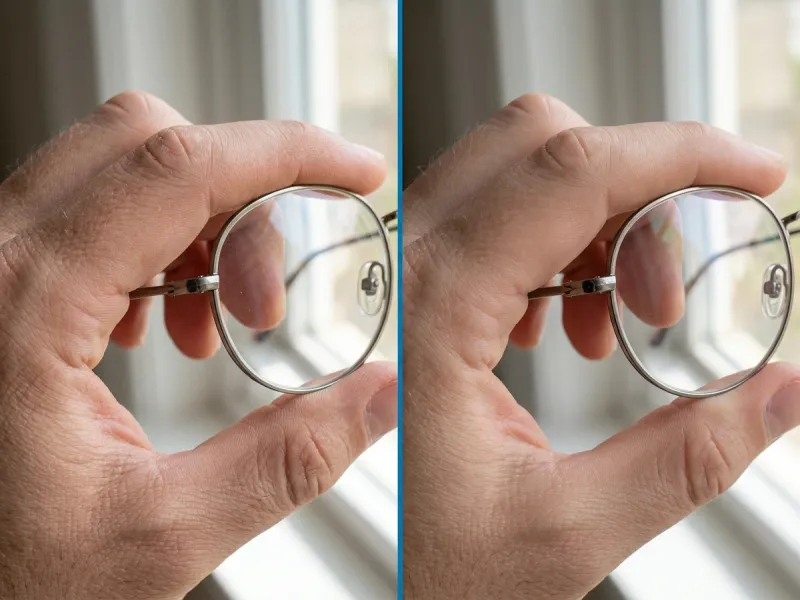
Consistent optical depth-of-field and physically aligned specular highlights.
Over-smoothed epidermal grain and warped mechanical frame junctions.
Quick summary
- Free allowance
- 1 successful check, no sign-up required
- Supported files
- JPEG, PNG, WebP, GIF (first frame), and HEIC (auto-converted & resized in browser to 5 MB / 20 MP)
- Retention
- Private report expires in 24 hours (deletable sooner)
- Scope & method
- AI vs. human probability + visual cues — read how it works
How to tell if an image is fake or real
Check the core classification first. Imagefake classifies the still image as AI-generated or human-made with model confidence, giving you an immediate starting signal without creating an account.
Inspect visual cues region by region. Look closely at fingers, teeth, ear geometry, text on signs, shadows, and reflections. When visual forensic breakdown is enabled, Imagefake highlights key visual areas to review alongside the score.
Remember real photos can still mislead. A real camera photograph shared with the wrong date, location, or caption can still be "fake" in context even when an AI classifier scores it as human-made.
Verify the earliest source. Reverse-search the image to see whether an unedited original appeared earlier, or ask the sender for the original uncropped camera file.
| Category | How it was made | What Imagefake signals | Recommended next step |
|---|---|---|---|
| Fully AI-generated | Entire scene synthesized by a generative model | AI / human classification with model confidence | Inspect anatomy, text, shadows and trace source |
| AI-edited | Real photo with localized inpainting or face swap | May miss small edits when most pixels are photographic | Compare earlier versions via reverse image search |
| Traditional manipulation | Cloning, splicing, altered numbers or false caption | Not certified by an AI classifier | Verify directly with the publisher or issuer |
Fake vs. real: three scenarios to separate
1. Fully synthesized AI image. Generated from a prompt with no camera capture behind it. Often shows high AI confidence and subtle rendering contradictions in hands, lettering, or background depth.
2. Real photo with AI edits. A genuine photograph where a person, object, or background was replaced or extended. Overall AI scores can stay low if most pixels remain photographic.
3. Authentic photo used out of context. No pixels were generated or edited, yet the claim attached to the photo is false. No pixel classifier can verify a caption on its own.
What your check and forensic breakdown include
Automated classification. AI-generated vs. human-made prediction with provider model confidence, kept private for 24 hours with JSON export and printing.
Visual forensic breakdown. A structured region-by-region summary of visual anomalies (lighting, anatomy, edges, typography, texture). Your free check shows a preview and lets you unlock the full breakdown plus 5 permanent checks for $0.99 with no account needed.
Honest limits. Scores and visual notes are investigation aids, not certificates of authenticity or legal proof.
Before you act on a suspicious photo
Do not rely on one number alone. Combine the classification score, visual inspection, reverse image search, and source confirmation.
Prefer original files over screenshots. Screenshots recompress pixels and strip camera headers, making any check harder to interpret.
Keep your report if timing matters. Export JSON or print before the 24-hour automatic expiry.
Frequently asked questions
How can I check if a picture is fake or real?
Upload the image above for 1 free check with no sign-up. You receive an AI-generated or human-made confidence score plus visual forensic cues, which you should combine with reverse image search and source verification.
If the detector says human-made, does that prove the photo is real?
No. A human-made prediction means the classifier did not find strong AI-generation signals. It does not rule out localized edits, Photoshop cloning, or a real photo shared with a misleading caption.
Do I need to create an account or subscribe to see the full breakdown?
1 free check. No account needed. Unlock a full visual forensic breakdown + 5 permanent checks for $0.99 one-time (no sign-up, Apple Pay / Google Pay / card), or subscribe for $2.99 per calendar month (20 checks). Active subscribers can also buy 10 permanent credits for $1.49. Checks are subject to available capacity.
Does it work on dating profile photos, marketplace listings, and social screenshots?
Yes, you can check JPEG, PNG, WebP, and GIF (first frame) files up to 5 MB. Keep in mind that heavy social-media compression and screenshots can reduce signal clarity.
What happens to the photo I upload?
Imagefake keeps its image copy and report for up to 24 hours, and you can delete a completed report sooner. Our detection provider may retain anonymized images to improve its models; its retention is separate. Do not upload sensitive or confidential images. See our privacy policy.
How is this different from the Fake Image Detector page?
It uses the same underlying classification and forensic pipeline as the fake image detector and shares the same free check allowance.
Is this a fake image generator or a fake image detector?
Imagefake is a detector, not an image generator. Upload an AI-generated or suspicious picture above to check whether it looks synthetic or real.